
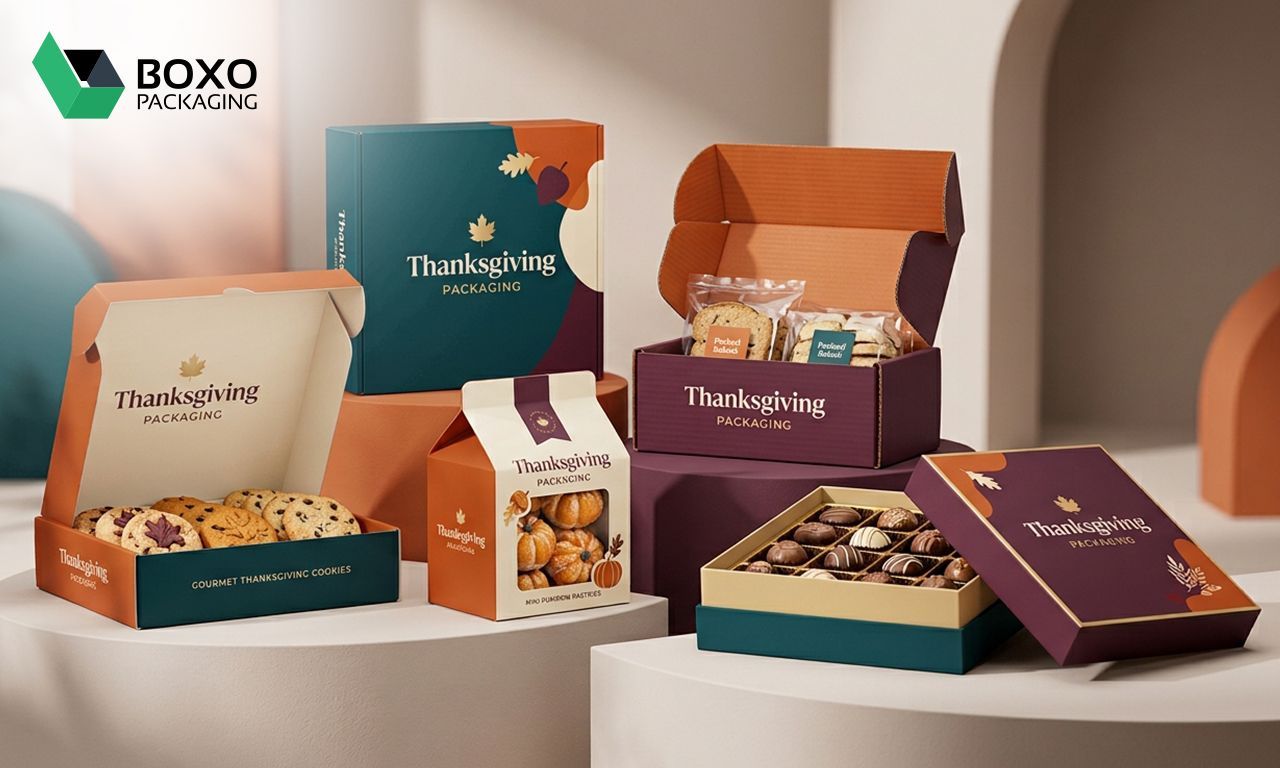
Mostly food, and most of it gets eaten within a day or two. Thanksgiving packaging has to cope with pie slices, cookies, rolls, and leftover plates that leave the house in a hurry, so grease resistance and a stable base matter more than decoration. Think about the journey first. A ten-minute drive to a relative's home asks less of a box than a trip on a crowded train.
Hosts also send guests home with small gifts, such as spiced nuts, jam jars, or a bag of baking mix. Those items are dry or sealed, so the outer carton can focus on presentation and structure. A short-lived seasonal item doesn't need heavy materials, but it does need to survive the handoff at the front door.
Which Formats Suit Pies, Cookies, and Small Gifts?
Gable boxes with a handle work well for a boxed meal, because the host can carry one with a single hand and hold a casserole in the other. Bakery-style folding cartons with a window let guests see what's inside before the lid comes up. Pillow boxes suit a pair of cookies or a small candy bundle, and sleeve boxes dress up a plain tray for a hostess gift.
A few details settle most format decisions:
• Food contact: confirm the inner surface and any coating suit direct contact with food
• Grease: a barrier or liner for buttery pastries and roasted nuts
• Stack height: boxes in a car trunk shouldn't crush the ones beneath
• Closure: a lock, tuck, or gable fold that stays shut on a bumpy ride
How Should Leftovers Be Packed?
Let food cool before it goes into the carton. Steam softens board and weakens the base, and a soft base is how a plate ends up on the car floor. Separate wet and dry items with a liner or a small tray so a gravy cup can't soak the pie box. A date written on the lid helps the next person decide what to eat first.
Why Does Storage Time Matter?
Cartons often arrive weeks before they're needed. Flat board absorbs humidity from garage or basement air and can warp, which makes folds close unevenly and handles sit crooked. Stack the bundles flat, keep them off the floor, and away from outside walls.
Stock structures with seasonal printing are a sensible route for thanksgiving packaging when quantities stay modest, because a new cutting die adds time and cost. Ask a supplier such as Boxo Packaging whether an existing structure can take your artwork before committing to a custom shape. Smaller orders and simpler shapes tend to leave more room for corrections.
Tuck Boxes for Small Sets That Travel Well
Yes, mostly because of how they're made and filled. They ship flat, assemble in seconds, and hold shut without tape. That combination matters at a table of hand-packed gifts, where one person might fill forty boxes in an evening. Tuck boxes also give a printed front panel that reads clearly from arm's length, which helps on a shelf or a dinner table.
What Goes Inside Besides the Product?
Inserts keep small items from drifting. A paperboard insert with a cutout holds a candle tin or spice jar in place, while folded tissue fills the space around a soft item such as a bundle of herbal tea sachets. Match the insert depth to the product height so the closing flap lies flat instead of bowing outward.
Can These Cartons Hold Food?
For dry food, yes. Cookies in a sealed sleeve, tea sachets, and spice blends in small bags all sit comfortably in a paperboard carton. Oily or wet items are different. Board on its own doesn't stop grease, so those foods need a liner or an inner wrap, and liquids belong in a sealed container first. Check local rules on food contact before putting anything edible directly against the board.
How Much Printing Is Worth It?
Small sets rarely need full-coverage color. A one-color print on kraft board can look warm and seasonal, and a printed band or sleeve slides over several different boxes. That lets you change the look from year to year without reordering the structure. Digital printing suits low quantities, and offset becomes more sensible as the numbers rise.
Shipping adds another question. A tuck closure can loosen if the carton is squeezed in transit, so boxes that travel by mail belong inside an outer shipping carton with some padding. A paper band or a small sticker across the flap adds a little extra hold for the trip.
For hand-packed sets, these points tend to matter most:
• Pack time: a box that assembles in one fold moves faster down the table.
• Insert fit: measure the product after it's wrapped, not before.
• Flap tension: test that the closure holds after two openings and closings.
• Labels: leave a plain panel for ingredients, dates, or a handwritten note.
Related formats fill the gaps. Reverse tuck boxes hold up better when a stack of gifts rides in a bag, folding cartons with a die-cut window show off a colorful jar, and gable boxes can carry several smaller cartons together as one hostess bundle. Tuck boxes cover the middle ground between a plain bag and a rigid gift box.